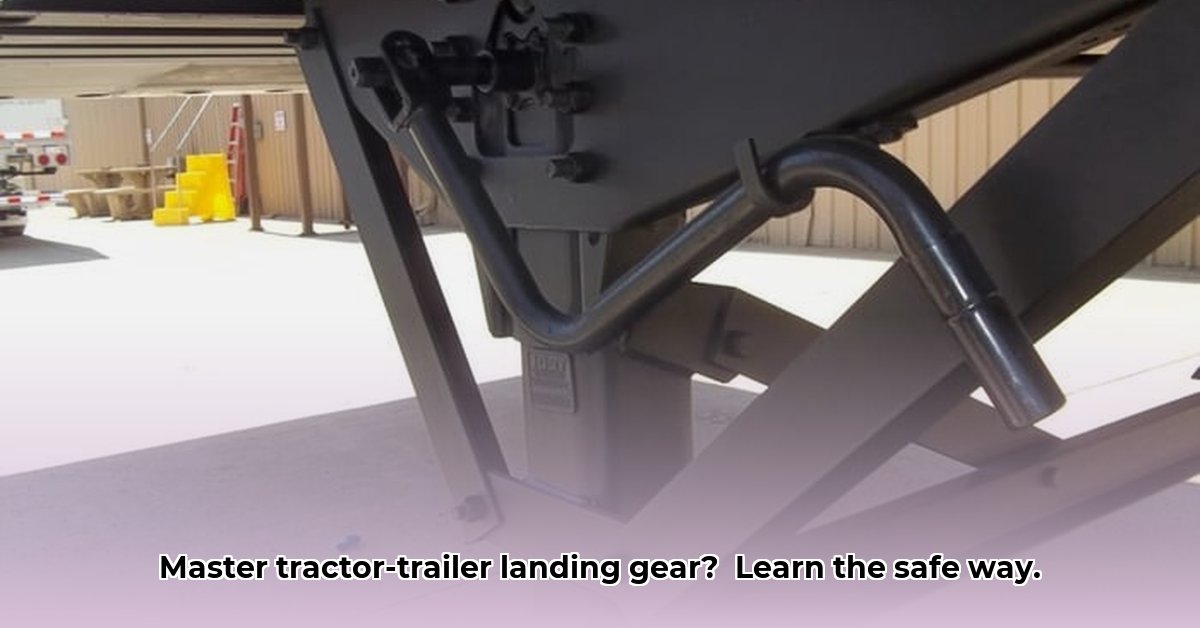
Understanding Your Trailer's Landing Gear System
Your semi-trailer's landing gear—those sturdy legs supporting the trailer when unhitched—are critical for safety and efficient operation. They bear the entire trailer weight when disconnected from the truck, making regular maintenance essential for preventing costly breakdowns and accidents. This guide provides practical steps to maintain, troubleshoot, and understand the latest technology in landing gear, ensuring smooth and safe operation for mechanics, fleet managers, and anyone interested in maximizing trailer uptime. For more in-depth information, check out this detailed guide.
Different Types of Landing Gear
Several landing gear designs cater to various needs. The most common are:
- Single-speed landing gear: A simpler design with a crank that raises and lowers the legs to a fixed height. Suitable for most applications where level parking is possible.
- Telescopic landing gear: Offers more height adjustment, making it ideal for uneven terrain and precise trailer leveling. Increased adjustability comes at the cost of increased complexity.
Choosing the right type depends on your typical hauling conditions and the types of surfaces you frequently encounter. Frequent use on uneven terrain necessitates a telescopic system's flexibility.
Daily Inspection: Your First Line of Defense
A quick visual inspection before each trip and after each trip is crucial. This takes just a few minutes but significantly reduces the risk of major issues. Look for:
- Bent or damaged legs: Any visible bending or damage requires immediate attention.
- Leaks: Fluid leaks near the gearbox indicate potential hydraulic problems.
- Excessive wear or rust: This signals potential weakening of the structure, which can't be ignored.
- Locking mechanism: Ensure it's fully engaged and secure. A malfunctioning locking mechanism is a serious safety hazard.
Do you want to ensure your operation is safe and efficient? Regular inspection is the foundation. Ignoring small problems can lead to large downtime or even accidents.
Step-by-Step Maintenance Procedures
Regular maintenance prevents problems before they occur. Here's a routine to follow:
- Cleaning: Thoroughly clean the landing gear, removing dirt, mud, debris, and road salt. Use a brush and compressed air.
- Crank Inspection: Check the crank handle for damage, cracks, or excessive wear. Significant wear mandates replacement.
- Lubrication: Lubricate all moving parts using the manufacturer's recommended lubricant. This prevents corrosion and extends the gear's lifespan. Proper lubrication ensures smooth, quiet operation.
- Locking Mechanism Test: Raise and lower the landing gear, ensuring the locking mechanism engages and disengages smoothly and completely. A malfunctioning mechanism is a serious concern.
- Sound Check: Listen for unusual sounds (squeaking, grinding, or clicking) during operation. These often signal underlying issues.
"Regular lubrication is essential," says Dr. Anya Sharma, Engineering Professor at MIT, "It's not just about extending the life of the components, but ensuring safe and efficient operation." The lubrication frequency should consider weather conditions and vehicle usage.
Troubleshooting Common Problems
Even with regular maintenance, issues might arise. Here's a table summarizing common problems, likely causes, and solutions:
| Problem | Likely Cause(s) | Solution |
|---|---|---|
| Gear Won't Extend | Lack of lubrication, jammed mechanism, damaged parts | Lubricate, inspect for obstructions, potential repair |
| Gear Won't Retract | Problem with locking mechanism, internal component failure | Check locking mechanism; may require professional repair |
| Wobbly Legs | Loose bolts, damaged components, structural weakness | Tighten bolts, inspect for damage, possible replacement |
| Hydraulic Leaks (if applicable) | Damaged hydraulic lines or seals | Repair or replace hydraulic components |
Serious problems always need professional attention. Attempting repairs without proper knowledge can worsen the problem leading to accidents.
Predictive Maintenance: Utilizing Technology
Modern technology allows for predictive maintenance. Sensors and data analysis monitor the landing gear's condition and predict problems before they occur. This proactive approach minimizes downtime and prevents unexpected breakdowns.
The Future of Landing Gear Technology
Advancements in automation (automatic deployment and retraction) and lighter, stronger materials (composites) are on the horizon. These improve safety, efficiency, and durability. Continuous research promises even more significant improvements in the future..
Remember, proper maintenance and regular inspections are vital for safe and efficient operation. Don't underestimate the importance of your trailer's landing gear; their reliability impacts your overall operational efficiency and safety. Proactive maintenance is a cost-effective solution for long-term success.